I wish I had done things differently.
September 21, 2026
I met a young engineer at a local event recently. He had spent years solving one of the hardest problems in his area. And he genuinely enjoyed the journey. Suddenly, things moved quickly. A respected VC approached. An industry leader expressed genuine commercial interest. What had been a technical pursuit became a startup. For him, it felt like the perfect opportunity: secure capital, continue advancing the technology, and finally bring years of research into the market. But among the many things we discussed, he said this several times:
I wish I had done things differently.
The plan had seemed entirely reasonable. Many entrepreneurs had followed similar paths successfully. But what quietly changed wasn’t the technology.
It was the founder’s role.
Building a company can feel like the next chapter of advancing an innovation. In reality, it is the beginning of making decisions that extend far beyond the innovation itself. Investors, partners, and early commercial opportunities become more influential. Momentum starts carrying the company forward. And before founders fully decided what kind of company they wanted to build, some choices that could have remained deliberate decisions may already have become commitments.
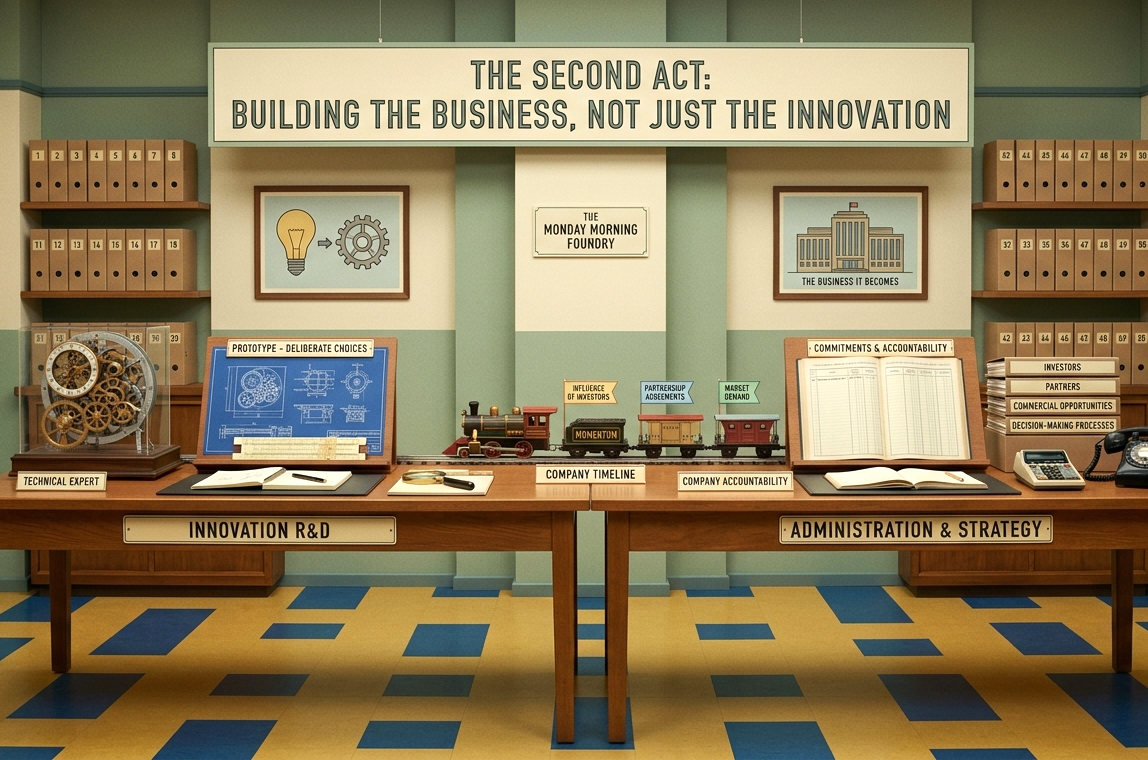
The value of an external perspective is less about changing direction and more about recognizing which decisions are still yours to make—before momentum, capital, and partnerships quietly make them for you.
If you are facing a similar situation, consider asking these questions:
- What am I actually committing to by building this company—not just financially, but strategically and personally?
- Are today’s investors and partnerships expanding my future options—or quietly narrowing them?
- Am I still building the technology I believe in, or am I now building a company around decisions already made?
The difficult part isn’t necessarily the technology. It’s realizing that the company can begin shaping the founder long before founders realize they must shape the company.
Disclaimer:
The information provided in this article is for general informational and educational purposes only. It is not intended as, and should not be construed as, professional business, legal, investment, or medical advice. Before making any strategic decisions, you should consult with a qualified professional. Calxera makes no representation or warranty of any kind, express or implied, regarding the accuracy, adequacy, validity, reliability, availability, or completeness of any information on this site.