The organization is ready. The future isn’t.
August 11, 2026
A former colleague recently shared exciting news with me: milestone achieved—their asset finally enters late-phase development.
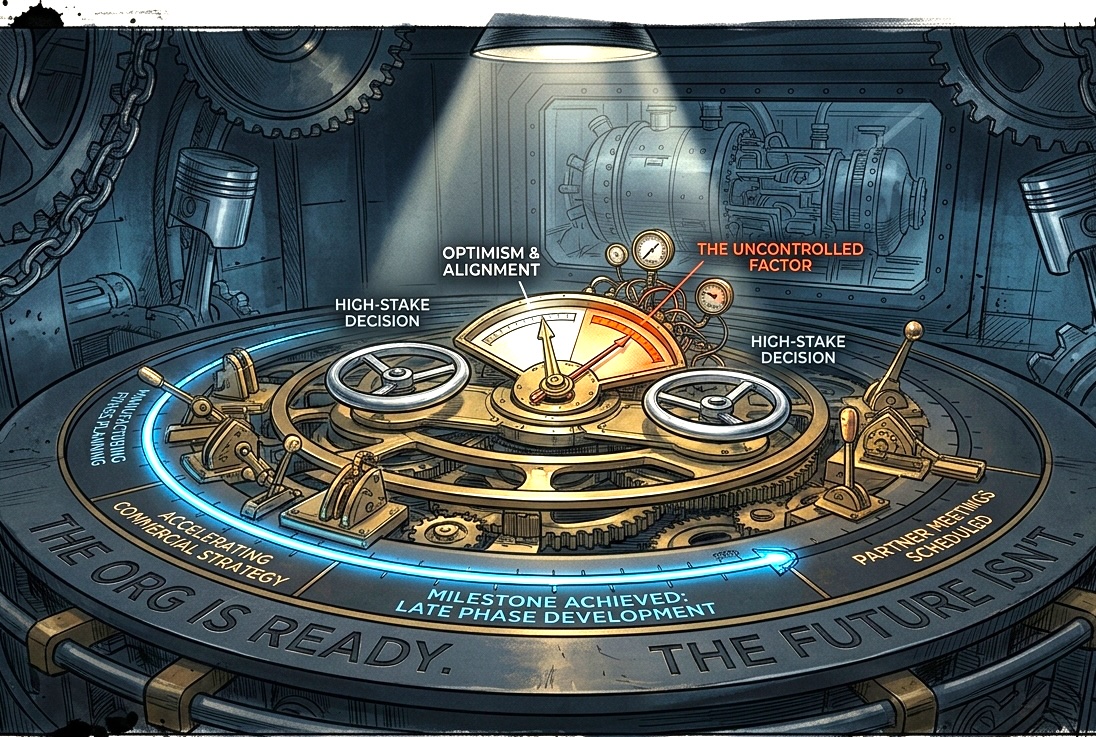
Unmet need is high; the field has long been anticipating a breakthrough, and the company is likely to be the first. Surrounded by spotlight and optimism, the organization has never felt so aligned and motivated: Commercial strategy accelerates; Manufacturing planning is outlined; Meetings with high-profile partners are scheduled… None of these are aggressive. In fact, these are exactly what a well-run organization should be doing. Except that one reality hasn’t changed:
the success still depends heavily on a number of factors beyond the company’s control.
After years of evaluating opportunities where only a small fraction could ultimately command capital, organizational attention, and institutional commitment, I’ve found that the issue is often not uncertainty itself. It is the confidence in execution that quietly begins to exceed what the organization can actually influence.
To surface hidden risks or blind spots, I often encourage teams to ask three questions:
-
Which external factors ultimately determine success, yet remain completely beyond our control?
-
Which commitments are we making today as though those uncertainties have already been resolved?
-
If those external conditions changed tomorrow, which commitments would we wish we had delayed?
Interestingly, these questions rarely slow the organization down. They help leadership commit with greater precision—not greater hesitation.
Sometimes the pressure-test doesn’t change the strategy. It changes the company’s commitment boundaries: what it commits to now, and what it deliberately leaves to evidence.
If this dilemma is sitting on your desk today, what factors are shaping your decision-making framework?
Disclaimer:
The information provided in this article is for general informational and educational purposes only. It is not intended as, and should not be construed as, professional business, legal, investment, or medical advice. Before making any strategic decisions, you should consult with a qualified professional. Calxera makes no representation or warranty of any kind, express or implied, regarding the accuracy, adequacy, validity, reliability, availability, or completeness of any information on this site.